Deer Facts for Kids (Antlers, Habits, and Forest Life)

Renée DeVincent • August 21, 2024

Mammals

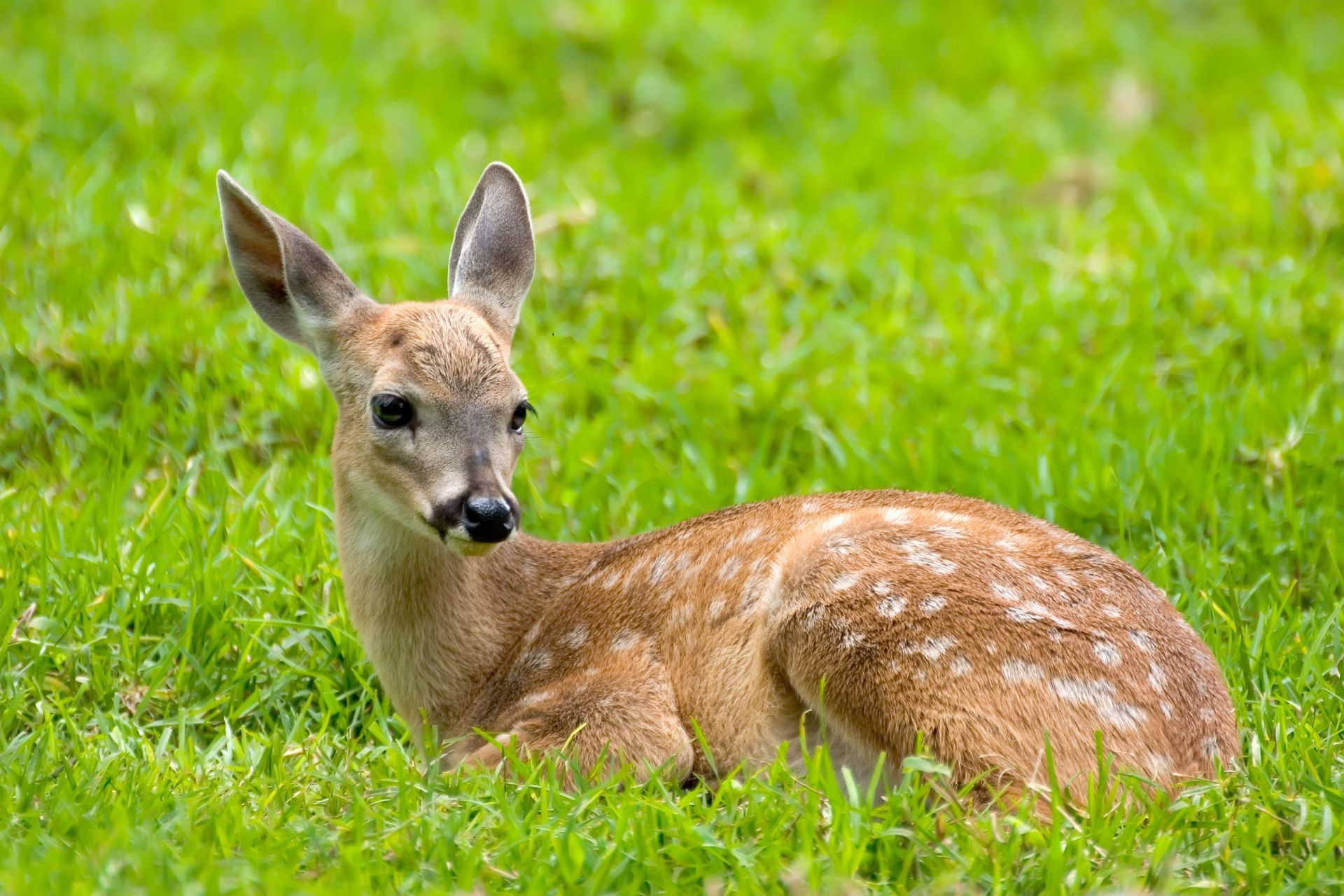
A baby deer is laying in the grass and looking at the camera.

Antlers, habits, and forest life are the story of a deer. Encountering a deer in your yard or out in nature can be an enchanting experience and a special moment to share with your kids. Deer are graceful and gentle creatures, and a wonderful reminder of the natural world's beauty. By understanding more about them, their habits, and needs, you can help foster, in your kids, an appreciation for nature. Follow along and learn more deer facts for kids.


Short Facts About Deer

  • Deer antlers are one of the fastest-growing tissues in the animal kingdom.
  • Despite their land-based lifestyle, deer are excellent swimmers.
  • Like cows, deer have a four-chambered stomach that allows them to digest tough plant material.
  • Deer can sprint up to 30 miles per hour.
  • Deer have dichromatic (two-color) vision, only seeing blues and greens, while humans have trichromatic vision.

5 of the Most Common Deer in North America

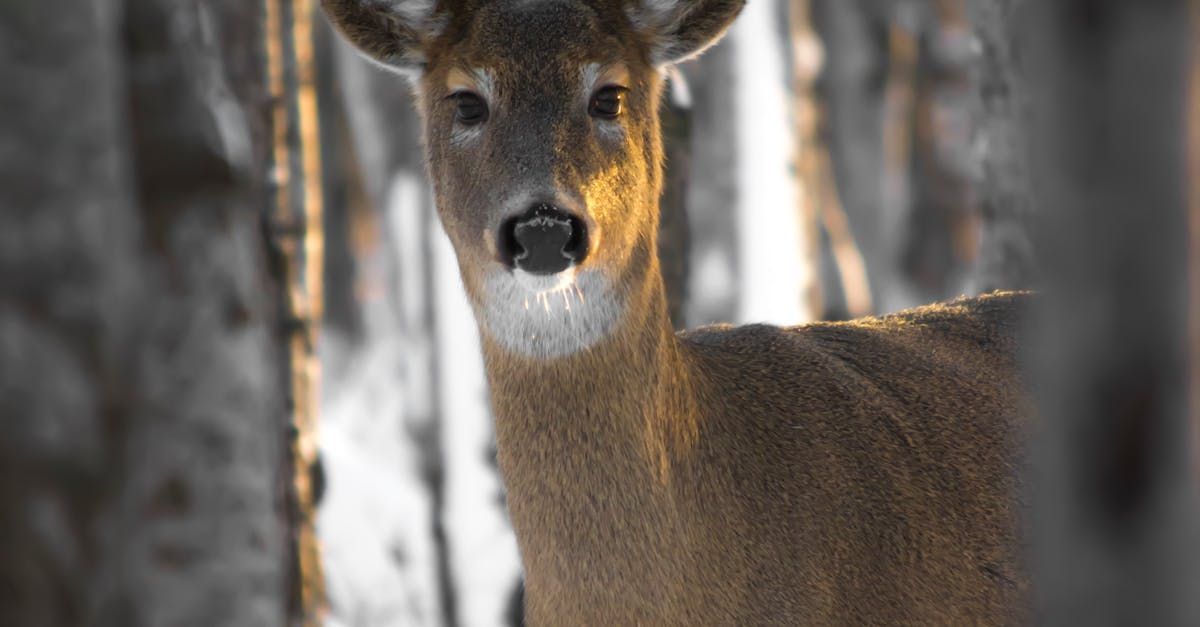
A deer is standing in the woods and looking at the camera.

Deer are part of the Cervidae family. They are known for having two large and two small hooves on each foot and also for having antlers. They have slender bodies and long legs, and their keen senses and agility make them masters of their environment. There are approximately 47 species of deer worldwide with only seven in North America.


Deer are incredibly adaptable and can be found in a variety of habitats, including forests, meadows, grasslands, and even urban areas. They are highly versatile and can make themselves at home wherever there is sufficient food, cover, and water. In suburban and rural areas, it's not uncommon to see deer venturing into yards and gardens.

photo by Hugh - stock.adobe.com

A deer is walking through a grassy field.

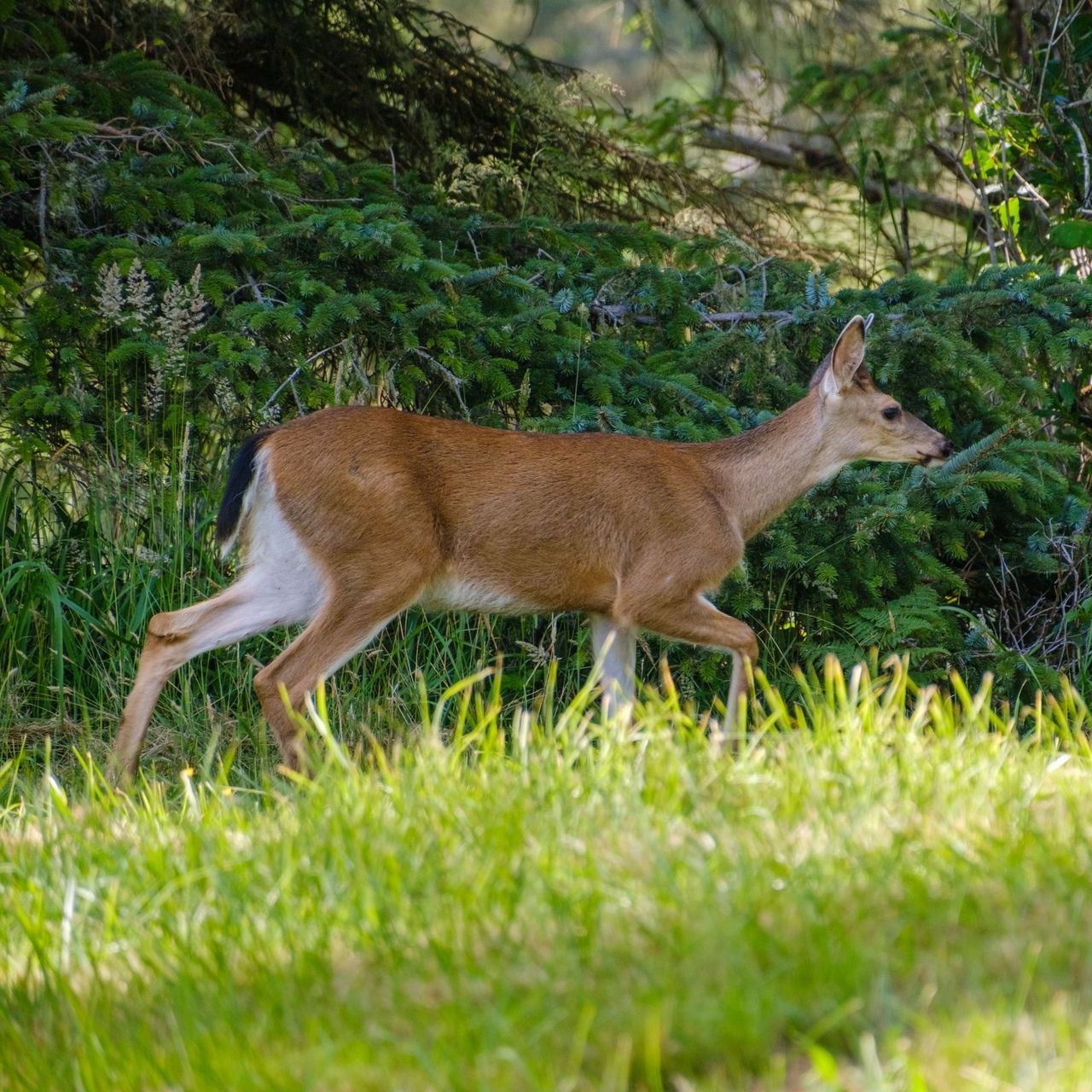
BLACK TAILED DEER

Black-tailed deer are calm animals, making them fun to watch. They play an important role in nature. Their eating habits help shape plants and keep the environment healthy. They are also a key food source for many predators, helping to maintain a healthy balance.


Blacktail deer are part of the mule deer family and can be identified by their black tail. They live in the coastal forests and mountainous regions of the Pacific Northwest, including California, Oregon, Washington, and parts of British Columbia and Alaska.
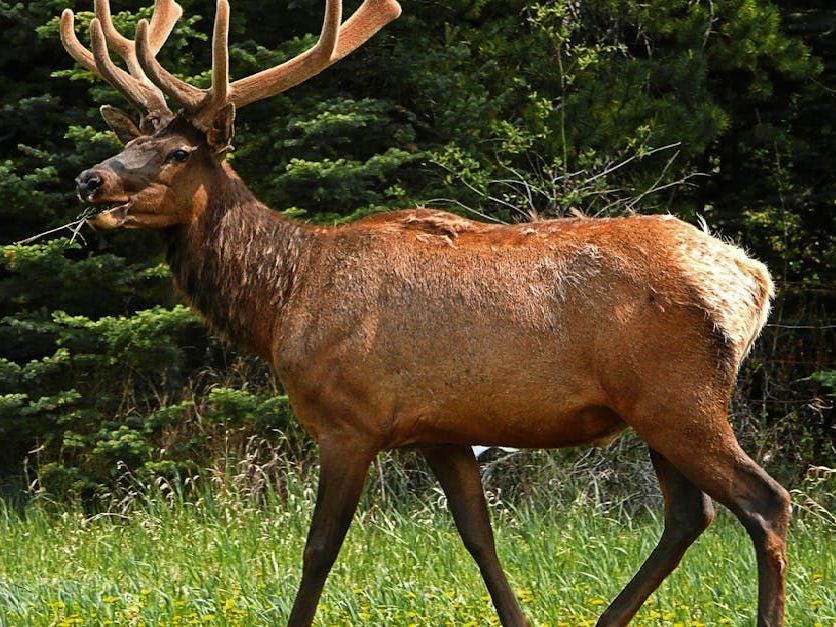
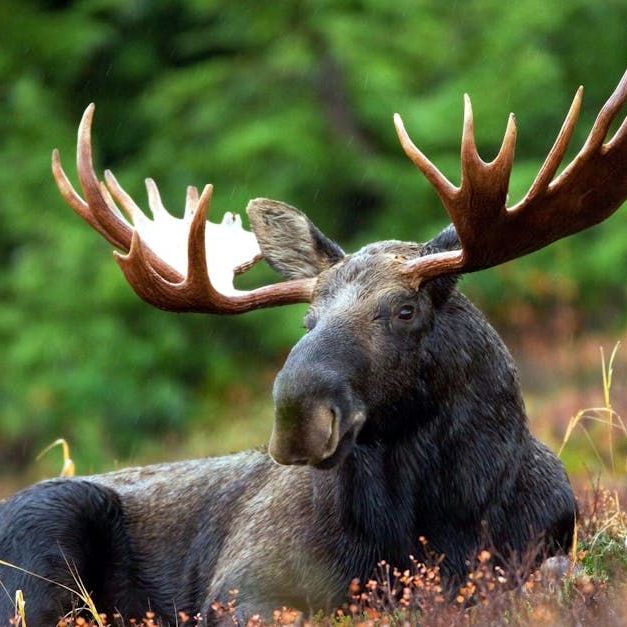
photo by stock.pexels.com

A deer with antlers is walking through a grassy field

WAPITI DEER

The wapiti, also known as the American elk, is a large deer found in the Western United States, especially in the Rocky Mountains and parts of the Midwest and Northeast. Some scientists think the wapiti is related to the red deer in Europe and Asia.

The wapiti is the second largest deer, only smaller than the moose.  Wapiti like to live in open forests and mountain meadows. They have brown fur with a yellow-white patch on their rump. Their shoulders and neck have long, dark brown hair. Male wapiti have large antlers that they shed and grow back every.
photo by stock.pexels.com

A moose with antlers is laying down in the grass

MOOSE

Moose are the largest deer, standing six feet tall and weighing over 1,000 pounds. They have hollow hairs that provide insulation. Moose live in the northern U.S., Canada, and Alaska, thriving in cold climates and forested areas with water.


Male moose, called bulls, grow antlers in spring for the autumn mating season. They drop their antlers after mating and regrow them each spring. Heat stress from warmer summers causes health issues, and ticks, thriving due to shorter winters, further weaken moose. This has led to a significant decline in the moose population, especially in New Hampshire.

photo by stock.pexels.com

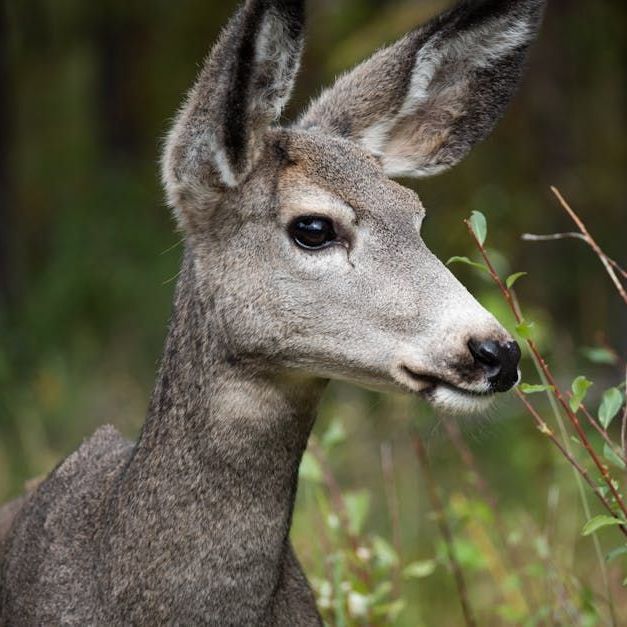
A close up of a deer standing in the grass looking at the camera.

MULE DEER

Mule deer are known for their large ears, about three-fourths the length of their head, and their black forehead contrasting with a light gray face. They change color with the seasons, being tannish-brown in summer and brownish-gray in winter. They have a white rump patch and a small white tail with a black tip. When they run, they bound in a motion called "stotting," where all four hooves push off the ground at the same time.

photo by stock.pexels.com

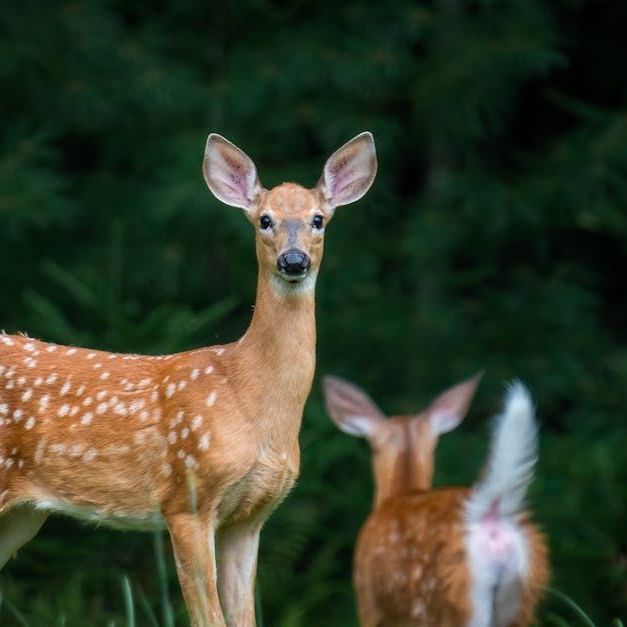
A couple of deer standing next to each other in the grass.

WHITE TAIL DEER

Whitetail deer are native to North America, ranging from southern Canada to as far south as Central America. They inhabit a wide variety of environments, including hardwood forests, mixed woodlands, grasslands, and even suburban areas. Their adaptability allows them to thrive in diverse habitats, from the dense forests of the eastern United States to the open landscapes of the Midwest and the mountainous regions of the West.


Whitetails have two seasonal coats: in spring and summer, their coat is reddish-tan, short, and wiry, while in winter, it becomes grayish or bluish-tan with long guard hairs and a thick undercoat for insulation. They also feature white patches around the eyes, throat, belly, tail underside, and the insides of their legs. The whitetail, which they raise when alarmed, is a key identifying feature.

Deer Babies are Called Fawns

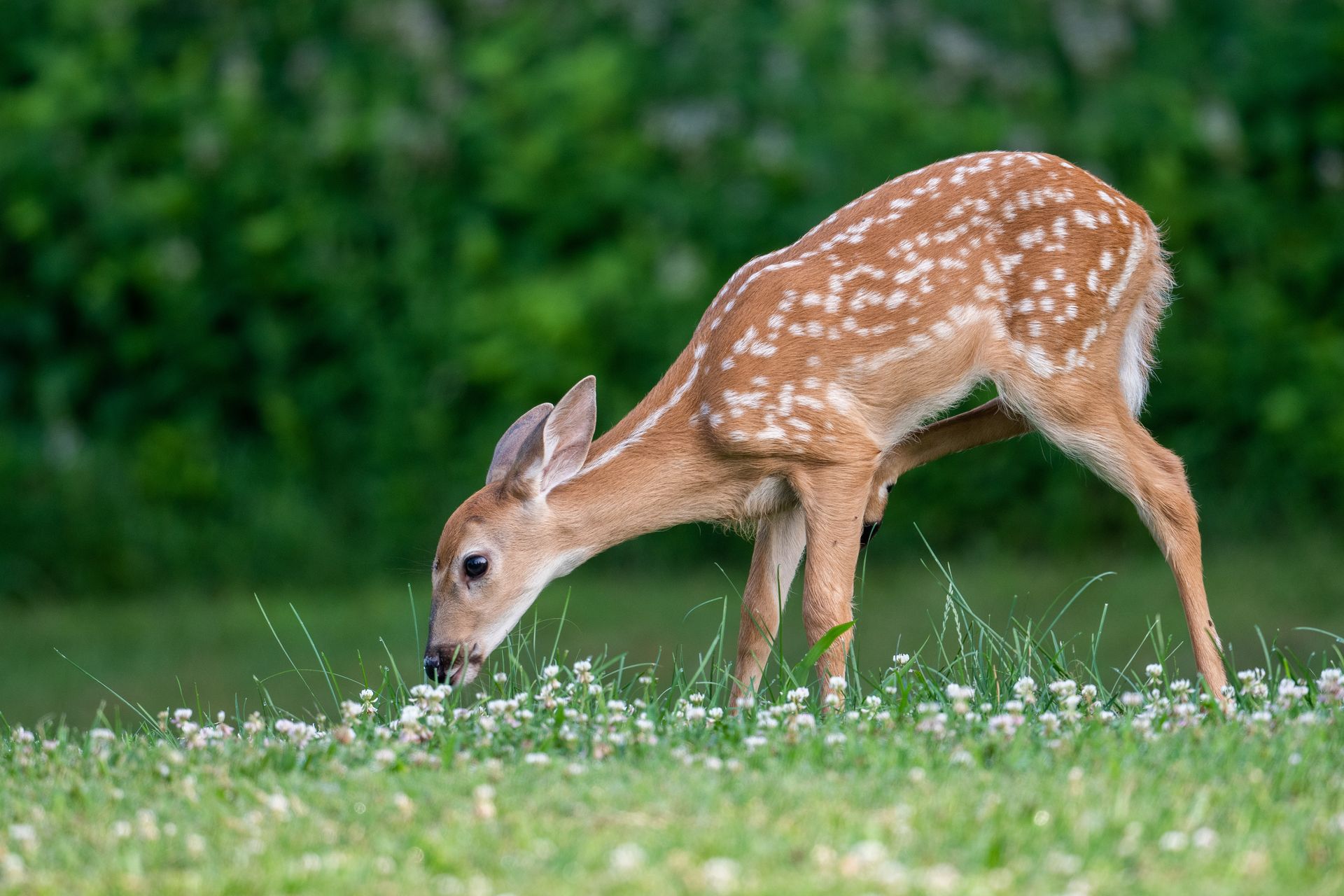
A baby deer is eating grass in a field.

Deer give birth to their young, called fawns, in the late spring and early summer. Fawns are born with white spots on their reddish-brown coats, which provide camouflage in dappled sunlight. These spots usually fade by the time they are 3-4 months old. Fawns are typically hidden in tall grass or underbrush while their mothers forage nearby, returning periodically to nurse them. By the time they are a few weeks old, fawns start to follow their mothers and learn how to find food and avoid predators.

What do Deer Eat?

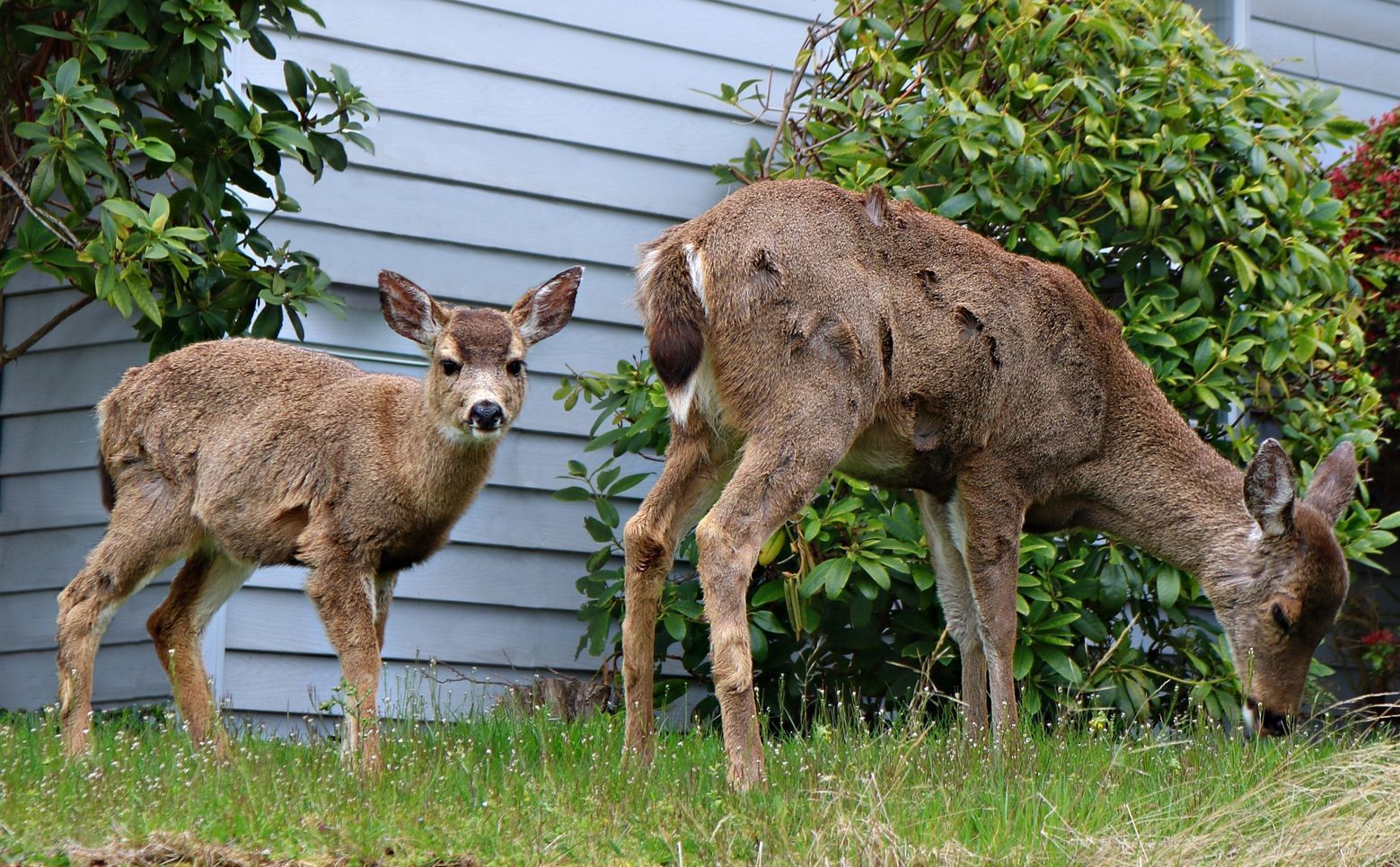
Two deer are grazing in the grass in front of a house

Deer are herbivores, meaning they mostly eat plants. Their diet includes leaves, twigs, fruits, nuts, grass, and even garden plants. They have a particular fondness for tender shoots and buds, which can sometimes lead to conflicts with gardeners. During the winter months, when food is scarce, deer will often eat the bark of trees and shrubs to survive.

Deer in Your Backyard

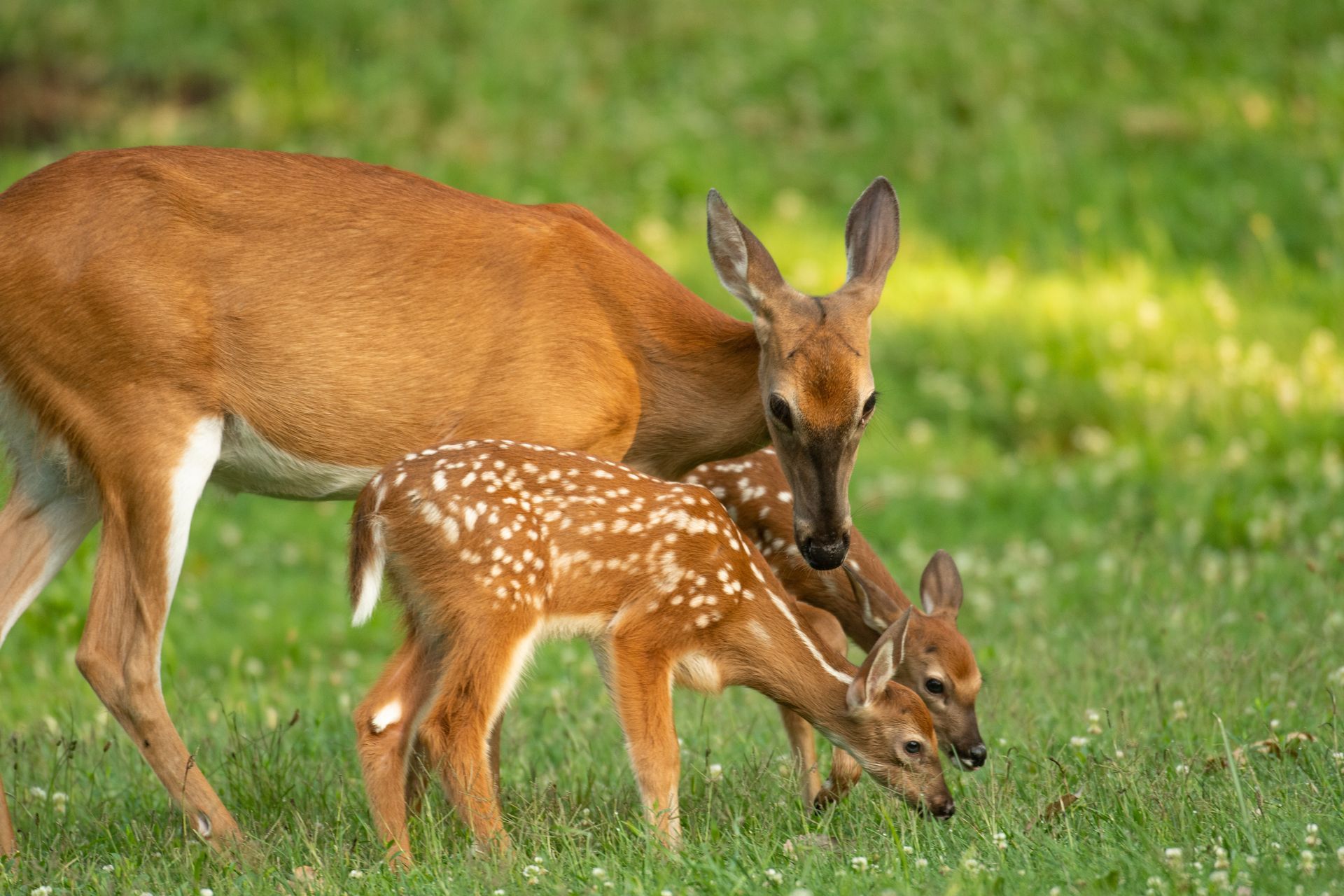
A mother deer and her baby deer are standing in a grassy field.

A Deer Friendly Space

Having deer in your backyard can be a delightful experience, giving you a chance to see them up close.


Here are some tips to make your backyard deer-friendly and safe:


  • Avoid Feeding Deer: While it might be tempting to feed deer, it's best to let them forage naturally. Feeding can make them dependent on humans and disrupt their natural behaviors.
  • Protect Your Garden: If you have a garden, consider using deer-resistant plants or installing fencing to keep deer away from your prized flowers and vegetables. Deer repellents can also be effective. Also, a well-placed log or brush pile can encourage deer to look for a more accessible spot.
  • Welcome Deer to the Table: Planting tasty deer favorite plants away from your garden or at the edges encourages deer to eat those instead of the plants you are growing for yourself. Add species that thrive on natural pruning to path edges.
  • Drive Carefully: Deer are most active during dawn and dusk. If you live in an area with a high deer population, be extra cautious when driving during these times to avoid accidents.
  • Enjoy from a Distance: Use binoculars or a camera to observe deer without getting too close. This helps to keep both you and the deer safe.


Who are Their Neighbors?

Deer share their habitats with other land-dwelling animals, such as rabbits, which often live in fields and forest edges, and badgers, which dig burrows underground. You may also find weasels nearby, moving quickly through grasses and brush, creating a diverse and active environment.

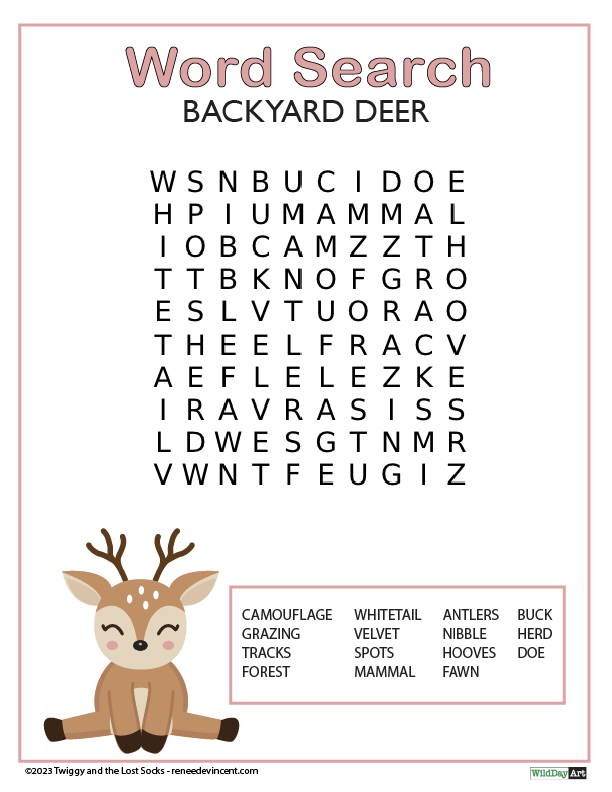
Deer-Themed Activities (Ages 3+)

It is a word search with a deer on it.

12 Deer Printable Activities

Get Activities
A set of nature deer stickers on a pink background

Dancing Deer Stickers

More Info
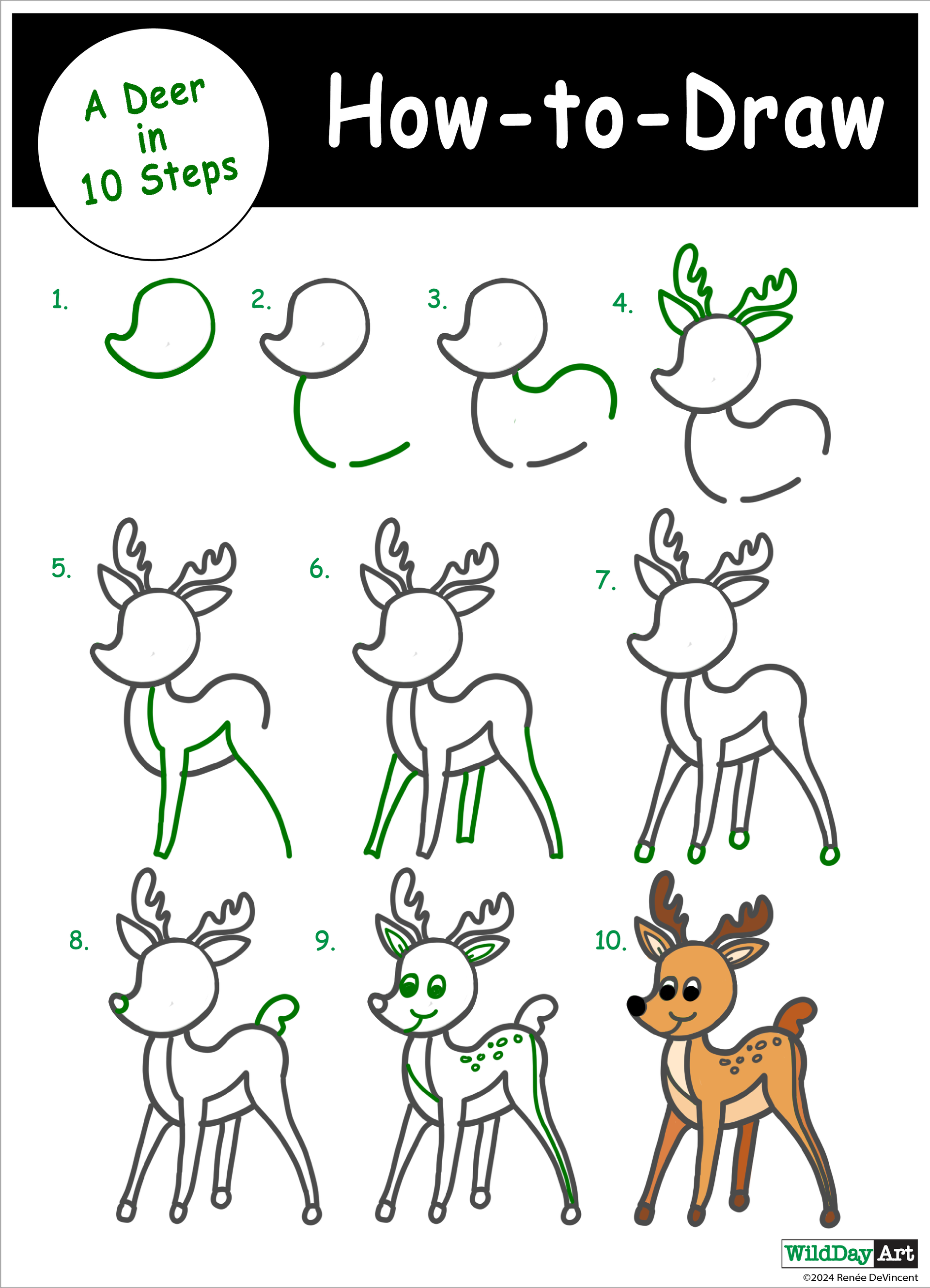
How to draw a deer in 10 steps

Learn How to Draw a Deer

Get the Template

Explore more animals in our Backyard Animals Facts for Kids collection

A dark-furred nutria runs through snow-covered field.
By Renée DeVincent January 20, 2026
Dams, Lodges, and Winter Survival!. Explore beavers this winter! Learn about lodges, tunnels, baby beavers, and fun family activities in this hands-on nature newsletter. πŸ¦«β„οΈ
Porcupine with dark brown fur and quills, walking on rocky ground.
By Renée DeVincent October 22, 2025
Learn porcupine facts for kids, including habitat, diet, and fun facts about these spiky forest animals. Discover where porcupines live and how they survive in the wild.
Badger with gray and white markings, outdoors, looking right.
By Renée DeVincent August 2, 2025
Learn all about badgers—their habits, habitats, and role in nature—plus creative ways for families to explore and celebrate them together.
Dark purple axolotl in an aquarium with plants and rocks.
By Renée DeVincent June 29, 2025
Discover amazing salamander facts and enjoy fun, family-friendly activities all about salamanders! Learn where they live, how they help your backyard, meet common species found across the U.S. and Canada, and try engaging salamander-themed activities for the whole family.
Blue jay perched on a metal ring; blue, white, and black feathers with green foliage in the background.
By Renée DeVincent May 28, 2025
Discover fascinating facts about Blue Jays. Where they live, what they eat, and how they mimic other animals. Perfect for kids, families, and curious birdwatchers, this fun guide to Blue Jays will have you looking up every time you hear a squawk in the trees!
Ladybug with black spots on a yellow flower with a green stem and background.
By Renée DeVincent April 28, 2025
Celebrate spring by welcoming ladybugs into your garden! Discover how these colorful beetles help plants thrive, what they eat, where they live, and how they survive the winter. Learn why it’s important to wait before cleaning up your yard and how to protect ladybugs and other helpful insects this season. A simple guide to supporting nature's tiny helpers as the world warms up.
Brown rabbit in lush green grass, holding a white flower in its mouth.
By Renée DeVincent March 20, 2025
This family-friendly blog explores the different types of rabbits in North America, provides fun facts and activities, offers backyard bunny spotting tips, and provides ways to appreciate these furry friends in nature. Perfect for kids and parents who love wildlife!
Stoat with brown upper parts and tan underparts, sitting on a rock, looking forward.
By Renée DeVincent February 1, 2025
Learn all about weasels, their habitats, behavior, and unique traits. Discover how to spot these elusive creatures, understand their role in nature, and explore common species like the long-tailed weasel, short-tailed weasel, and least weasel. Get insights on how weasels compare to similar animals like minks, martens, and fishers.
Bobcat cub peering out of dense, brown and green foliage.
By Renée DeVincent December 11, 2024
Discover the fascinating world of bobcats—North America’s stealthy wildcats. Learn about their habits, habitats, and role in keeping ecosystems balanced, plus tips for coexisting with wildlife.
Close-up of a jumping spider with large eyes, brown and tan fur, and a blue background.
By Renée DeVincent October 23, 2024
A fun and educational blog about backyard spiders, exploring their fascinating behaviors, helpful roles in nature, and cool facts for curious kids!
Bat hanging upside down, eating fruit; brown fur, pink tongue, yellow melon.
By Renée DeVincent September 30, 2024
Discover how these nighttime flyers help our world! From eating pesky insects to spreading seeds and pollinating plants, bats are amazing creatures that play a big role in nature. Get fun educational bat activities.
Box turtle with brown and yellow shell, looking directly at the viewer.
By Renée DeVincent July 22, 2024
Explore six of the most common wild turtles you might find in your backyard. Discover their unique features, habitats, behaviors, and care tips to create a turtle-friendly environment and ensure their well-being in the wild.
Brown Carolina Wren perched on a branch, looking left. Rust-colored body, brown wings, tan face, red berries.
By Renée DeVincent June 15, 2024
Join me in celebrating my favorite bird, the Wren! This post highlights the charm and energy of these tiny birds, featuring fun facts, their unique nesting habits, and tips to make your backyard a welcoming haven for wrens. Learn about their behavior, diet, and the joy of watching these resourceful and lively birds. Make learning about the Wren more engaging for kids with fun activities.
Green frog perched on pink hydrangea flowers.
By Renée DeVincent May 16, 2024
🐸 🌿 Learn about the differences between frogs and toads and what sets them apart, and uncover fascinating insights into their anatomy, habitat, behavior, and defense mechanisms. Gain a deeper appreciation for these captivating creatures and their vital role in the natural world.
A raccoon is sitting in the grass looking at the camera.
By Renée DeVincent April 8, 2024
Explore our blog's fascinating world of raccoons, where we uncover their cleverness, charm, and mischievous antics. From their masked faces to their nimble paws, these resourceful creatures never fail to surprise us.
White wolf standing on a rock, in a forest with autumn leaves.
By Leokadia George & Renée DeVincent March 8, 2024
Learn about wolves! While they may have been portrayed as villains in stories, Discover the truth about these incredible creatures. Join us as we journey deeper into the wild and meet some real celebrity wolves. But first, here are some fun facts that you may not know!
Otter with brown fur, white face, and whiskers peering out, dark green background.
By Renée DeVincent February 8, 2024
Charming and adorable, otters are very fun to watch. Their expressions are cute, and their movement is delightful. Spotting these furry creatures in the wild means the environment is healthy. However, the river otter is often mistaken for other animals like the sea otter, beavers, and muskrats. We will explore how special the river otter is in this edition of the Wild Truth.
A close up of a snowy owl with yellow eyes looking at the camera.
By Renée DeVincent January 8, 2024
Owls have interested people for centuries with their wise eyes, hoot-filled talk, and sneaky nightly adventures. Join us on a journey into the night sky and the secret world of owls. πŸ¦‰πŸŒ™
A red fox cub is standing in the grass looking at the camera.
By Renée DeVincent December 2, 2023
Journey into the clever world of foxes! 🦊✨ Explore the mysteries, intelligence, and charm of these captivating creatures with the Wild Truth blog. From fun facts to fascinating behaviors, join us in unraveling the clever world of foxes. πŸŒΏπŸ“–
Red squirrel, facing the viewer, on a gray stone path, with foliage.
By Renée DeVincent November 6, 2023
Learn squirrel facts for kids, including habitat, diet, and fun facts about these busy backyard animals. Discover how squirrels prepare for seasons.
Bee on orange and yellow flower, collecting nectar.
By Nocola Williams & Renée DeVincent October 5, 2023
Bug into the hive and discover the amazing life of honeybees 🐝 and their amazingly social lives and hive harmony. 🀩 Learn how to help bees thrive in the fall and prep for winter. πŸ―β„οΈ Join us as we welcome author and beekeeper Nocola Williams as she unveils her book Bugzee and the Bees. 🌼🍯🐝
A hummingbird perched on a branch with a green background.
By Renée DeVincent September 4, 2023
Fly into the enchanting world of hummingbirds! 🌸 Discover their lightning-fast flight, incredible nest-building skills, and unique sleeping habits. Learn how to create the perfect hummingbird haven in your yard, complete with vibrant flowers and well-maintained feeders. And don't miss the fascinating insight into their nighttime 'Hummingbird Torpor'!
Opossum perched on snow-covered branch, looking down. Pink nose and feet, gray fur.
By Renée DeVincent August 6, 2023
🌟 Meet the Marvelous Opossums! Nature's secret superheroes are rocking their very own pouches, just like kangaroos! 🦘 Get ready for cuteness overload as opossum moms carry up to 10 adorable joeys in their cozy pouches. πŸ˜πŸ‘Ά Join us on a journey to discover the magic of these furry pouch-tastic creatures! 🌿🐾
Butterfly with black and white patterned wings rests on red flowers.
By Renée DeVinent July 15, 2023
πŸ¦‹ Unleash the Enchanting World of Butterflies! 🌈✨ These winged wonders are like living art pieces, fluttering through the air with grace and beauty. 🎨🌸 Join us on a mesmerizing journey to explore the magical metamorphosis of caterpillars into these exquisite butterflies! πŸ›πŸ¦‹ Let their vibrant colors and delicate dance inspire your imagination and joyfully fill your day! 🌼🌞