Wild Turkey Facts for Kids
Birds | Backyard
There's something captivating about seeing a flock of wild turkeys making their way along the edge of the woods. With their long legs, curious movements, and impressive size, they certainly know how to put on a show. But behind their somewhat comical appearance is a surprisingly clever and resourceful bird with remarkable abilities. Wild turkeys have adapted to life in forests, fields, and even suburban neighborhoods, often living much closer to us than we realize. And while they may seem like a familiar animal, there's plenty about these fascinating birds that might just surprise you!

5 Short Facts About Wild Turkeys
- Wild Turkeys can swim
- They take dust baths to keep their feathers healthy
- Wild turkeys can fly up to 55 miles per hour
- Turkeys swallow small stones to help digest their food
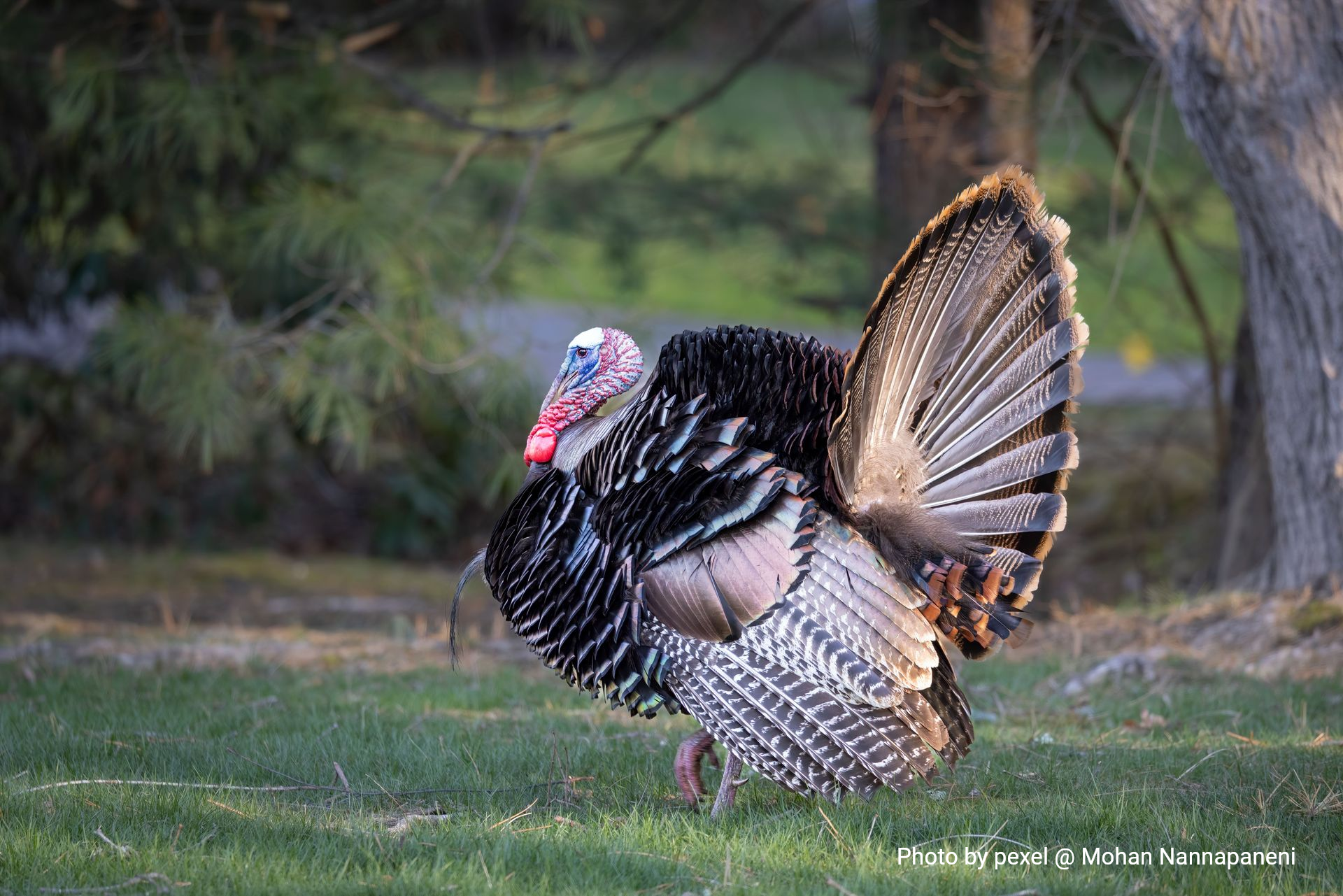
- A male wild turkey's head turns colors (red, white, and blue) based on its mood
More About Wild Turkeys
Not all wild turkeys look exactly alike. North America is home to five different kinds of wild turkeys. Some have dark chocolate-colored tail feathers, others have sandy tan tips, and a few have beautiful white-tipped tails. Some are even taller than others! Take a close look at their feathers and see if you can spot the differences. Focusing on their tail feathers rather than their weight is an easier way to tell them apart.

Wild turkeys may spend most of their time walking on the ground, but they're surprisingly talented when it comes to getting around! Despite their large size, they can fly up to 55 miles per hour for short distances, using their powerful wings to escape danger. And believe it or not, wild turkeys can even swim! When necessary, they paddle through the water using their strong legs.
You might be surprised to learn that wild turkeys sleep in trees! As the sun begins to set, they fly up into sturdy tree branches to roost for the night. Sleeping high above the ground helps keep them safe from predators like foxes and coyotes. When morning arrives, they fly back down to begin another day of exploring and searching for food.
When they're not on the move, wild turkeys spend much of their day searching for food and caring for their feathers. You might spot one wiggling around in a patch of loose dirt, taking a dust bath to help keep its feathers in good condition and reduce tiny pests. And here's another surprise—turkeys swallow small stones! Since they don't have teeth to chew their food, these little stones help a muscular part of their stomach, called the gizzard, grind up tough seeds, nuts, and other foods. Who knew these familiar backyard birds had so many clever ways of surviving in the wild?
Male vs. Female Wild Turkeys

Male wild turkeys, called toms or gobblers, are larger and more colorful than females, called hens. Males have beautiful feathers that shimmer with bronze, copper, and green, while females have softer brown coloring that helps them blend into their surroundings.
A Color-Changing Head! Male turkeys have nearly featherless heads that can change between shades of red, white, and blue! Changes in blood flow cause these colors to shift when they're excited or showing off. Females have smaller, less colorful heads, usually in shades of gray, blue, and pink.
What's a Snood? That funny piece of skin dangling over a turkey's beak is called a snood. Both males and females have one, but a male's snood is usually much longer and can stretch past his beak!
What's a Wattle? The loose, fleshy skin hanging beneath a turkey's chin is called a wattle. Males have larger, more noticeable wattles that can become brighter when they're excited.
A Turkey With a Beard? Male turkeys often have a bundle of stiff, hair-like feathers hanging from their chest called a
beard. Surprisingly, some females grow beards, too!
Turkey Talk: More Than Just a Gobble
Did you know that wild turkeys have their very own way of talking to one another? They don't just use their voices. These fascinating birds communicate with sounds, colorful heads, and even their feathers.
A Face Full of Color!
Take a close look at a male wild turkey's head. You might notice bright red, blue, or even white skin! But here's the really amazing part—those colors can change! When a male turkey gets excited or wants to impress another turkey, changes in blood flow can make the colors on his head look different.
Gobble, Cluck, Purr!
Most people know that turkeys gobble, but did you know they have a whole collection of sounds? A loud gobble can announce a male turkey's presence. The gobble-gobble sound usually comes from a male turkey. A soft cluck helps turkeys keep in touch, while a sharp putt! can warn that danger is nearby. Turkeys even make gentle purring sounds when they're relaxed.
A Feathered Fashion Show!
When a male turkey wants to show off, he really puts on a performance! He spreads his tail feathers into a giant fan, puffs up his body, and struts around like he's the star of a parade. His feathers can shimmer with beautiful shades of green, bronze, and copper when the sunlight hits them just right. This colorful display helps him attract female turkeys and show other males who's in charge.
Wild Turkeys in Your Backyard

You might be surprised to discover that wild turkeys can be backyard visitors! They're most often spotted in neighborhoods near woods, open fields, or parks. Look for them walking across lawns, scratching through fallen leaves, or searching beneath trees for acorns, seeds, and insects. You might even see a whole flock traveling together! Wild turkeys are most active during the day, especially in the morning and late afternoon.
Want to make your yard more welcoming to wild turkeys? Native trees, shrubs, and plants provide natural food and shelter. Oak trees are especially valuable because turkeys love acorns! Leaving some fallen leaves and natural areas undisturbed also gives them places to search for insects and seeds. If you spot wild turkeys, enjoy watching from a distance. They're wild animals, so it's best not to approach or feed them.
Who Are Their Neighbors?
Wild turkeys share their woodland and backyard habitats with plenty of other wildlife. Keep an eye out for
squirrels gathering acorns,
deer browsing near the trees, and
rabbits hiding in grassy areas. You might even notice that some of these animals enjoy the same foods and habitats as wild turkeys!
Wild Turkey Themed Family Activities (Ages 3+)


Hands-On Outdoor Activity

You don't have to spot a wild turkey to know one has visited! These feathered visitors leave clues behind: Footprints, scratches, scattered food, and loose dirt.
Can you find clues that a wild turkey has visited your backyard or the area near your home? Grab a grown-up, head outside, and see what you can discover!
Ready to investigate? Download our Turkey Track Detective Activity Sheet and let the tracking adventure begin!
Article Sources:
Please Share!
Explore more animals in our Backyard Animals Facts for Kids collection